Rand Paul: Obama, don't jump into war

Posted by Unknown

Rand Paul: The civil war in Syria has no clear national security connection to the U.S. Paul: Without enough information, military intervention in Syria would be unwise He says the Constitution grants the power to declare war to Congress, not the president Paul: America's wars must be debated by Congress and declared constitutionally sound

Editor's note: Rand Paul, a Republican, is a U.S. senator from Kentucky.

(CNN) -- The enemy of my enemy is not always my friend.

On one side we have al Qaeda; on the other side we have Syria's authoritarian president Bashar al-Assad. On one side we have Islamic jihadists; on the other side we have Christians.

In all likelihood the al-Assad regime has used chemical weapons to kill civilians. And without a doubt Islamic rebels have kidnapped and killed priests and civilians.

It seems on all sides we have violence and chaos and it is unclear if any side will, in the end, be a friend of the United States.

Opinion: Al Qaeda's potent force in Syria

Sen. Rand Paul Sen. Rand Paul

The Constitution gave the power to declare war to Congress. One of our founding fathers, James Madison, specifically argued that the executive branch was most prone to war and for that reason, the power to declare war was vested with the legislature.

If the debate were to come to Congress, two great ironies would have to be overcome:

1. The arms supplied to the Islamic rebels may well be used against Christians;

2. The Islamic rebels we aim to arm are allied with al Qaeda.

The war in Syria has no clear national security connection to the United States, and victory by either side will not necessarily bring into power people friendly to the United States.


Could U.S. strike worsen Syria crisis? How the Persian Gulf responds to Syria What life is like for Syrians
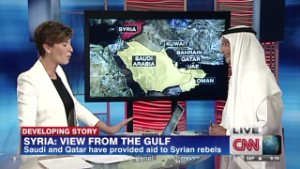
The United States should condemn the use of chemical weapons. We should ascertain who used the weapons and we should have an open debate in Congress over whether the situation warrants U.S. involvement. The Constitution grants the power to declare war to Congress, not the president.

Recent statements by the Obama administration concerning the al-Assad regime's alleged use of chemical weapons indicate that we may be on the precipice of war with Syria. Without adequate information and intelligence, military intervention in that nation's civil war would be an unwise decision. Based on the knowledge of the situation that we do have, such action would assuredly be an unwise decision for the long-term interests and security of the United States.

Furthermore, our Constitution delegates war-making powers to Congress for an explicit reason -- to provide a check on presidents who might make unwise or hasty decisions in foreign affairs. Syria is not an exception to this rule, but a good example of why the Constitution gives Congress the power to declare war and not the executive branch.

Opinion: For U.S., Syria is truly a problem from hell

The unquestionable murkiness of the situation in Syria demands congressional debate before action -- not the other way around.

The United States should unequivocally condemn the use of chemical weapons against the people of Syria. There are still many questions regarding this alleged chemical attack, including what specifically was used and by whom. It seems prudent to at least allow the investigation to conclude before even talking about military action.

The Obama administration should also consider the retaliation from Syria or Iran that may occur on Israel, Jordan, and our other allies in the region. It should consider possible retaliation against the U.S. homeland. Nobody can game out how quickly this war might spiral out of control.

From a strategic standpoint, there are three questions that should always be asked and sufficiently answered before going to war: What is the U.S. national interest? What is the military objective? What is the exit strategy? Concerning Syria, these questions not only haven't been answered -- they haven't even been asked.

Opinion: Learn from U.S. mistakes in Iraq

War should never be treated as a crapshoot. Our troops deserve better. America deserves better.

President Obama used to understand the weightiness of war. In 2007, then-Sen. Barack Obama argued to a Boston Globe reporter that the president of the United States lacked the authority to unilaterally authorize military attack without an "actual or imminent threat to the nation." At that time, many Democrats were worried that President Bush would initiate conflict with Iran. These situations are similar in nature when it comes to a constitutional analysis.

Today, any constitutional perspective the president may have once had seems to have vanished.

The sight of civilian suffering and death in Syria is heart-wrenching. No one disputes that al-Assad is a vile dictator. But in our rush to "do something" we shouldn't make an already bad situation worse. Americans seem to instinctively know that getting involved in Syria is not a good idea. According to the latest Reuters/Ipsos poll, only 9% of Americans believe that the U.S. should intervene. Understandably, Americans are not eager to be plunged into another questionable or misguided war.

Like other aspects of Obama's foreign policy, his Syria policy is confusing. There are no specific goals underlying the president's use of force -- no consistency. Nor does there seem to be any effort to educate the American people, or Congress, as to why this action may be taken.

It was Obama who called for al-Assad's ouster before it was clear he could be ousted. It was Obama who drew a "red line" he didn't think al-Assad would cross.

The president's line in the sand may have been a strategic blunder. But it is not enough reason to go to war.

America's wars must be debated by Congress, declared constitutionally and fought only for the interests and security of the United States. They should never be fought to save face.

Follow us on Twitter @CNNOpinion.

Join us on Facebook/CNNOpinion.

King family in bus crash after ceremony

Posted by Unknown

A bus was carrying members of King family after 'Dream' speech ceremony The bus and a car collided near Washington's Tidal Basin just off the National Mall Reality star Omarosa Manigault said she was on the bus: 'We were very afraid' Mall Police say a person in the car taken to hospital; no report yet on bus passengers

'Revenge porn' should be a crime

Posted by Unknown

Danielle Citron: "Jane's" ex posted nude photo on revenge porn site with contact info Citron: Women harassed, lose jobs, stalked as photos posted without permission go viral It's legal in all but one state, she says, and no law can make sites take photos down Citron: Nonconsensual disclosure of naked images needs to be criminalized

Editor's note: Danielle Keats Citron is the Lois K. Macht Research Professor and professor of law at the University of Maryland Francis King Carey School of Law. She is an affiliate scholar at the Stanford Center on Internet and Society and an affiliate fellow at the Yale Information Society Project. She is writing a book on online harassment, which will be published by Harvard University Press.

(CNN) -- "Jane" allowed her ex-boyfriend to take her naked photograph because, he assured her, it would be for his eyes only. After their breakup, the man betrayed her trust.

On the revenge porn site UGotPosted, he uploaded her naked photo and contact information. Jane received calls, e-mails, and Facebook friend requests from hundreds of strangers, many of whom wanted sex.

Danielle Keats Citron Danielle Keats Citron

After the site refused to take down the post and the anonymous calls and e-mails intensified, she turned to law enforcement. According to the officers, nothing could be done because her ex had not engaged in a harassing "course of conduct," as required by criminal harassment law, and because he had not explicitly solicited others to stalk her.

Criminal law should have a role in deterring and punishing revenge porn. It's not new that certain types of privacy invasions are crimes. Many states prohibit the nonconsensual taking of sexually explicit images -- the disclosure of someone's naked images should be criminalized as well.

But in all but one state, New Jersey, turning people into objects of pornography without their permission is legal. A single post, however, can go viral and ruin someone's life.

Revenge porn and its ilk raise the risk of offline stalking and physical attack. Fear can be profound. Victims don't feel safe leaving their homes. Jane, who is a nurse, did not go to work for days. As many victims have told me, they struggle especially with anxiety, and some suffer panic attacks. Revenge porn victims withdraw from online engagement, shutting down their social media profiles and blogs to prevent strangers from finding them online. They cannot participate fully in our networked age.

The professional costs of revenge porn are steep. Because searches of victims' names display their naked images, they lose their jobs. Schools have fired teachers whose naked photos appeared on revenge porn sites. A government agency terminated a woman's employment after a co-worker circulated her nude photograph to colleagues.

Women sue revenge porn website 'Revenge porn' site founder defends site

Victims may be unable to find work at all. According to a 2009 Microsoft study, more than 80% of employers rely on candidates' online reputations as an employment screen. Common reasons for not interviewing and hiring applicants include concerns about their "lifestyle," "inappropriate" online comments, and "unsuitable" photographs, videos, and information about them.

Recruiters don't contact victims to see if they posted nude photos of themselves or if someone else did in violation of their trust. The simple but regrettable truth is that after consulting search results, employers don't call revenge porn victims to schedule an interview or to extend offers. It's just seen as good business to avoid hiring people whose search results would reflect poorly on them.

Revenge porn is a harmful form of bigotry and sexual harassment. It exposes victims' sexuality in humiliating ways. Their naked photos appear on slut shaming sites. Once their naked images are exposed, anonymous strangers send e-mail messages that threaten rape. Some have said: "First I will rape you, then I'll kill you." Victims internalize these frightening and demeaning messages.

New Jersey is the only state to make it a felony to disclose a person's nude or partially nude images without that person's consent. The New Jersey statute is a helpful model for states like California that are considering proposals to criminalize revenge porn. Congress should amend the federal cyberstalking law, 18 U.S.C. § 2261A, to cover the use of any interactive computer service to produce or disclose a sexually graphic visual depiction of an individual without that individual's consent.

What about First Amendment objections to legislative proposals to criminalize revenge porn? A narrowly crafted criminal statute like New Jersey's can be reconciled with our commitment to free speech. First Amendment protections are less rigorous for purely private matters because the threat of liability would not risk chilling the meaningful exchange of ideas.

Listeners and speakers have no legitimate interest in nude photos or sex tapes published without the subjects' permission. That online users can claim a prurient interest in viewing sexual images does not transform them into a matter of legitimate public concern. Nonconsensual pornography lacks First Amendment value as a historical matter, and could be understood as categorically unprotected as obscenity. Although the Court's obscenity doctrine has developed along different lines with distinct justifications, nonconsensual pornography can be seen as part of obscenity's long tradition of proscription.

Criminalizing revenge porn is a crucial step in protecting victims from real and profound harms to their physical, emotional, and financial health and safety. It would deter damaging privacy invasions and send the powerful message that posting someone's most private moments, most often in a breach of their trust and without their permission, is unacceptable.

That lesson needs to be repeated early and often before online users, especially young people, think that shaming and terrorizing individuals is an acceptable practice. We need a "cyber civil rights" agenda to combat bigoted online abuse. The criminalization of nonconsensual disclosure of someone's naked images is an important part of that agenda.

Follow us on Twitter @CNNOpinion.

Join us on Facebook/CNNOpinion.

Girl raped, kills self; rapist gets 30 days

Posted by Unknown

NEW: Protests are planned for Thursday Judge apologizes for comments about teen The judge says Rambold is "treatable" "It's not probably the kind of rape most people think about," judge says

Shoppers do WHAT in empty store?

Posted by Unknown

Four college students go to a store to look for items for their dorm rooms They walk inside, no one else is there, and they leave money for their items and go Store management is called, and on arrival, nothing is seen missing Video shows the students paying; the store chain gives the four a shopping spree