Libyan television aired a video of Saadi Gadhafi speaking from Tripoli jail Gadhafi's son says he is being treated well, moves arms and smiles in video The conditions surrounding the release of the video are unclear Human rights activists say they worry legal proceedings won't meet international standards
Outrage over airline's baggage note
Posted by Unknown
You won't believe this note left on couple's luggage! - CNN.com Video
Wake up to the reality of climate change
Posted by Unknown
Bill Richardson: New report says the science is clear: The world is warming in dangerous ways Impact of climate change is being felt on every continent, the report finds He says governments and companies are taking steps to respond to the threat Richardson: Ultimately, setting a national price for carbon is the way to transition to the future 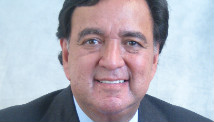 Bill Richardson
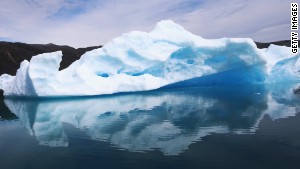 deGrasse Tyson on climate change deniers
 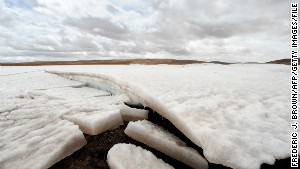 Climate change is not debatable
  Expert: Sea levels make flooding worse
Editor's note: Bill Richardson is the former governor of New Mexico, former U.S. ambassador to the United Nations, former U.S. Energy Secretary, and a current board member of the World Resources Institute, a global research organization on environmental issues. He serves on the boards or consults with companies in the energy field. The opinions expressed in this commentary are solely those of the author.
(CNN) -- "Nothing poses a bigger threat to our water, our livelihood and our quality of life than a warming climate." Those are my words from 2006 upon the signing of an executive order on climate change for New Mexico when I was governor.
Almost a decade later, this statement still holds true. But now we have even more information about climate change, both the risks and solutions.
Bill Richardson The just-released report by the Intergovernmental Panel on Climate Change (IPCC), a collection of more than 800 leading climate scientists, reaffirms that climate impacts are already occurring and having a dramatic impact on society. Climate change is driven by our dependence on fossil fuels and is expected to get worse. In order to shift directions, we need nothing less than to rethink how we power our country.
Here's what we know:
The climate science is settled. The IPCC report is the latest addition to a staggering body of scientific research connecting our energy choices to costly climate disruption. The report is consistent with several other authorities -- such as the National Academy of Sciences, U.S. Global Change Research Program, and the National Oceanic and Atmospheric Administration -- that bring stronger language and greater certainty about climate change and its risks. Just as we know that smoking causes cancer, we understand that human activity causes climate change.
deGrasse Tyson on climate change deniers Climate change is not debatable Expert: Sea levels make flooding worse Climate change is happening now and we are all feeling the effects. Earlier this month, the American Association of Advancement of Science reminded us that "climate change is happening here and now."
We are now witnessing how it is changing our world: The past winter was the eighth-warmest on record. For 348 consecutive months -- 29 years -- global temperatures have been above average.
The latest IPCC report finds that impacts from climate change are "widespread and consequential" and they are being felt on every continent and in our oceans. The world last year experienced 41 weather-related disasters that caused damages totaling at least $1 billion. Over the past decade, the western United States experienced seven times more large-scale wildfires than it did in the 1970s. Climate change has made it much more likely that we will suffer severe droughts like the one that recently swept across Texas and my home state of New Mexico.
Finally, without action, things will get a lot worse. As climate impacts mount, they will bring more damage to our economy and communities. Even 1 degree Celsius (1.8 degrees Fahrenheit) of global temperature rise could cut yields of crops like wheat, rice and corn, driving up food prices. Unless greenhouse gases are reined in, many more people will be at risk from devastating flooding, similar to what residents faced in Boulder, Colorado, last year. Overall, economic losses from climate change will cause a significant blow to the global economy, even at the lower end of climate projections.
So what can we do in the face of a changing climate?
Fortunately, local leaders, including mayors and governors, are responding to climate impacts and building more resilient communities. For example, city officials from Chicago to Miami are taking steps to reduce urban flooding with permeable pavement, dampen extreme heat with green roofs, and redesign levies to withstand stronger storm surges.
At the federal level, the Obama administration has called for additional funding for climate resilience and just unveiled a climate data initiative to arm communities with better information about climate change.
But, it's clear that we need to do more. According to the IPCC, by significantly reducing emissions we can avoid the worst consequences of climate change and cut economic damages by half.
We're making progress already. Americans are embracing clean energy, buying solar panels at a record pace as the price has plummeted by 80% in just four years. Many large companies, like Apple, Google and Walmart, are investing heavily in renewable energy. Even ExxonMobil is among dozens of U.S. businesses now operating with an internal price on carbon.
And important new emissions standards are coming. Under the U.S. Climate Action Plan the president announced last year, the Environmental Protection Agency is moving ahead with standards to reduce carbon pollution from existing coal-fired power plants -- the largest source of U.S. emissions. These rules are the most significant opportunity to cut U.S. emissions in the near term and will help the country play a leadership role in the run-up to a universal climate agreement in 2015.
The science tells us that much deeper reductions are needed in the decades ahead. Ultimately, a national price on carbon would be the most effective way to expedite a transition to a safer, low-carbon future.
The evidence is overwhelming: Further inaction guarantees disaster. Alternately, we can re-balance our energy mix and rise to the challenge of the 21st century. Let's hope that a decade from now we will look back with confidence that we stood up to the global climate crisis.
Follow us on Twitter @CNNOpinion.
Join us on Facebook/CNNOpinion.
Does Obama really understand Putin?
Posted by Unknown
Andrew Kuchins: Obama and allies have issued empty threats at Putin Kuchins: Despite Russia's annexation of Crimea, Obama's responses are weak He says since Putin has met no push back for Crimea, why would he stop there? Kuchins: Putin may ruin Obama's legacy by further encroaching Ukraine 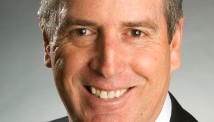 Andrew C. Kuchins
  Putin's comparison to Kosovo 'bizarre'
  Fareed's Take: Putin's Crimea invasion
 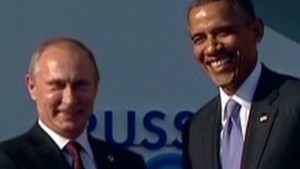 Putin calls Obama to talk about Ukraine
Editor's note: Andrew C. Kuchins is director and senior fellow of the Russia and Eurasia Program at the Center for Strategic and International Studies in Washington. The opinions expressed in this commentary are solely those of the author.
(CNN) -- I recall being an undergraduate in Russian Studies at Amherst College when the Soviet Union invaded Afghanistan in December 1979. I was flabbergasted when then-President Carter initially expressed surprise that Leonid Brezhnev and his cronies decided to undertake that ill-fated adventure. Just the little I knew of Soviet history at that time led me to conclude that one should never be naïve about Russia. Wisely, the Carter administration soon implemented a wide-ranging and powerful set of sanctions against the USSR.
By comparison, Barack Obama is now making Jimmy Carter look like Attila the Hun with a series of empty threats and "too little, too late" punitive measures against Putin's Russia.
On February 28, President Obama warned Russia not to take military action against Crimea, and if he did so, serious "costs" would be imposed. A few weeks later, Crimea was annexed to Russia and virtually no serious "costs" have been incurred from U.S. sanctions.
Andrew C. Kuchins Now Obama and our European allies have virtually conceded Crimea, but again warn Putin that we really mean it this time, that if you take military action in Ukraine outside Crimea, you will be really sorry!
I think the only thing that has surprised Putin is how weak Obama's response has been. The administration was not prepared for the contingency that Putin would act so brazenly.
But Obama's stubborn insistence on a measured, incremental approach seems premised on his belief that Putin will, after his frustration and anger clears, come to his senses and seize the proverbial "off ramp" Obama and his officials ritualistically refer to, hearkening back to nearly two years of the mantra, "Assad must go." We know that Assad never left, and I see no evidence that Putin wants to take the "off-ramp."
Surely Putin's goals were not limited to getting Crimea while losing Ukraine. That does not make sense. And since he has met virtually no push back for Crimea, why would he stop there?
Putin's comparison to Kosovo 'bizarre' Fareed's Take: Putin's Crimea invasion Putin calls Obama to talk about Ukraine It is not like his views on Ukraine are not fairly well known. At the Bucharest NATO summit in April 2008, Putin told George W. Bush in no uncertain terms that Ukraine was not a real country. And now Putin has found the appropriate moment to demonstrate to the "trans-Atlantic community" that Ukraine is not a real country by starting to dismember it with impunity.
In case there was any doubt about Putin's views of the illegitimacy of the post-Cold War European security order in Europe, his vitriolic speech to the Federal Assembly in Moscow on March 18 should clarify it for skeptics. I have no doubt that there is nothing Vladimir Putin would rather do than delegitimize the post-Cold War order, expose the Trans-Atlantic partnership as a sham and deeply degrade U.S. leadership in the world. He has already gone fairly far down that path in four weeks.
Why do American presidents have such a hard time understanding Russian leaders? First, it starts with our inability to fathom just how traumatic the collapse of the Soviet Union was for several generations of Russians. From a clinical standpoint, Russia has been suffering from post-traumatic stress disorder for the past couple of decades.
Putin resonates with many Russians because he is seen as the embodiment of the humiliation, status deprivation and grievances that the country has purportedly suffered.
Making matters worse, he was an intelligence operative virtually abandoned by what he and his brethren view as incompetent Soviet leadership. The ethos of the Russian intelligence officer going back to the foundation of the secret police in the early 19th century centers on their special, almost messianic obligation to save Russia from itself -- a task only they were adequately trained for.
These were people who, for example, enthusiastically supported the U.S. initiative more than 20 years ago to remove nuclear weapons from Belarus, Kazakhstan and Ukraine, not because they gave a damn about nonproliferation but because when the day came for Russia to restore the "Greater Russia," that task would be much easier with nukes out of the way.
In the 1990s, many speculated about the danger of a "Weimar Russia" scenario in which the humiliated superpower would re-emerge in more of a fascist form.
I am afraid that day has arrived. Putin's task is to take back what a certain streak of Russian nationalism views as not only rightfully, but sacredly, what should be Russian. Obama may satisfy some supporters and even some critics by taunting Putin and Russia as a "regional power" of no great consequence acting out of "weakness." This will only bait the bear to lash out to demonstrate who is really weak and who is strong. It is a game that Obama is not psychologically equipped to understand, let alone win.
A Russian strike, either after a manufactured provocation or without one, into eastern Ukraine, is inevitable. Putin smells blood in the water, and nothing we have said or done will deter him. Economic measures alone are insufficient.
If Obama does not rise to this challenge soon, I fear that Putin will happily ruin his legacy and U.S. credibility, with massive collateral damage for Russians and Ukrainians. Putin will likely meet his own end if he miscalculates in Ukraine. It is incumbent for the United States, its allies and most importantly Ukrainians themselves, to help Putin not miscalculate because if he does, there will be hell to pay for all of us.
Follow @CNNOpinion on Twitter.
Join us at Facebook/CNNOpinion.
LZ: Christian silence on gay hate
Posted by Unknown
Pope Francis and President Obama discussed the importance of empathy LZ Granderson says the Pope was right last year when he said: Who am I to judge? Sadly, he says, many others don't follow that teaching Granderson: Don't answer the persecution of gay people with silence 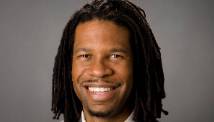 LZ Granderson
 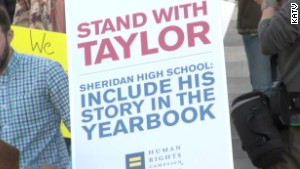 Community rallies around gay student
  Catholic: 'We're being besieged'
 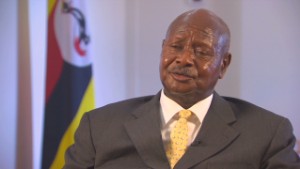 Ugandan President: Being gay not a right
  Gay Ugandans committing suicide
Dan Haseltine
Editor's note: LZ Granderson is a CNN contributor, a senior writer for ESPN and lecturer at Northwestern University. Commentary by the former Hechinger Institute fellow has been recognized by the Online News Association, the National Association of Black Journalists and the National Lesbian and Gay Journalists Association. Follow him on Twitter @locs_n_laughs. The opinions expressed in this commentary are solely those of the author.
(CNN) -- Pope Francis sent shockwaves around the globe last July when in addressing the issue of gays in the church, he opted not to remind his 1.6 billion followers about the fiery pits of hell but instead posed a question: who am I to judge?
Not exactly a ringing endorsement for equality but the rhetorical question was light years away from what we have grown accustomed to hearing from his predecessors. And because of that, we felt a glimmer of hope that maybe the needle within the larger Christian community had moved from hostile rhetoric to civil engagement.
LZ Granderson Maybe even tolerance.
In their nearly one-hour meeting this week, Pope Francis and President Barack Obama reportedly spent the bulk of their time discussing empathy.
Community rallies around gay student Catholic: 'We're being besieged' Ugandan President: Being gay not a right Gay Ugandans committing suicide "It's the lack of empathy that makes it very easy for us to plunge into wars," the President said afterwards.
Presumably he was referring to military wars though that sentiment is obviously applicable to the culture war as well.
For only a lack of empathy could prompt officials at a Christian school in Virginia to suggest an 8-year-old girl attend a different school because she wasn't behaving in a feminine enough way to stay at theirs. (The school says it can't provide details because of confidentiality but "this matter is far beyond a simple 'hairstyle and tomboy issue' as inaccurately portrayed.")
Only a lack of empathy could lead Catholic school officials to fire a beloved teacher for planning to marry the love of his life. A lack of empathy is the reason why "The "700 Club's" Pat Robertson can be flippant about stoning gay people to death in the days of Jesus or lead Franklin Graham -- Billy Graham's son -- to suggest that LGBT people might adopt children in order to "recruit."
All of these incidents occurred after Pope Francis asked "who am I to judge?" as if ostracizing an elementary school tomboy was the best answer some of the Christian faith had to that question.
On the day the story of the little girl made national headlines, Dan Haseltine, lead singer for the Christian band Jars of Clay, tweeted, "why do I find myself regularly shaking my head, or rolling my eyes at supposed Christian leaders." He followed with, "I am learning that love's most potent manifestation happens when we make room at the table for everyone."
Love's most potent manifestation happens when we make room at the table for everyone.Dan Haseltine
Haseltine's remarks were refreshing because many Christians in his position prefer silent disapproval in response to over-the-top quotes and head-scratching stories like the one involving the little girl. If you're curious why more and more people are leaving the church maybe it's because they hear "love the sinner but hate the sin" from the pulpit -- and then see so many followers go about their day as if simply saying the word "love" excused them from actually having to show any.
Many followers of Christ may find silence on this topic easier, not noticing silence is being interpreted as endorsements -- whether they agree with the anti-gay rhetoric or not. For each time "Who am I to judge?" is asked, an anti-gay quote from the Catholic League's Bill Donahue is there to answer.
To move Pope Francis' question from a global headline to global change, Christians must stop allowing silence to be the de facto weapon of choice against the senseless persecution of gay people.
Forty percent of the country's homeless youth identify as LGBT, with nearly half kicked out of their homes by those who are supposed to love and care for them. There's a sermon topic we don't hear every week -- but we should.
Slave owners used to start and end each service on the plantation with Ephesians 6:5 -- "Servants, be obedient to them that are your masters according to the flesh, with fear and trembling, in singleness of your heart, as unto Christ."
"Who am I to judge?" was not enough to change that.
Women were once compelled to stay with abusive husbands with the words "wives, submit yourselves unto your own husbands, as unto the Lord."
"Who am I to judge?" was not enough to empower women and get the legal system to prosecute their assailants.
It was in such silence that laws in Uganda were originally drafted to make being gay punishable by death. Laws that found validation from the ties some Ugandan politicians had to well known U.S. evangelicals who regularly visited the country. The evangelicals have since distanced themselves from the anti-gay politics of Uganda. But not because of some moral stirring within their soul but because they were called out on it.
Because the silence ended.
Cardinal Timothy Dolan -- when asked about NFL prospect Michael Sam coming out of the closet -- said on NBC's "Meet The Press," "The same Bible that tells us that teaches us well about the virtues of chastity and the virtue of fidelity and marriage also tells us not to judge people."
A truism that is ignored way too often by anti-gay Christian leaders. A truism that isn't reiterated enough by those who follow them.
Follow us on Twitter @CNNOpinion.
Join us on Facebook.com/CNNOpinion.