Chemical weapons a nightmare

Posted by Unknown

Syria's Assad regime is accused of using chemical weapons on civilians Laurie Garrett: Sarin probably was deployed; those who die from it suffer terribly She says sarin was developed in WWII era as a potent form of destruction Garrett: It would be nightmare for Syrians to experience toxic gas in a litany of despair

Editor's note: Laurie Garrett is senior fellow for global health at the Council on Foreign Relations and a Pulitzer Prize-winning journalist.

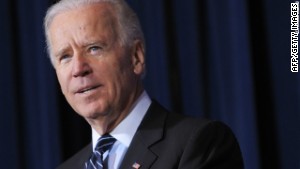
(CNN) -- This week, the world is learning that on August 21, Syria's Assad regime attacked civilians living on the outskirts of Damascus, killing at least 355 of them, including many small children. According to Vice President Joe Biden, there is "no doubt" that chemical weapons were used by the regime -- and not, as the Assad government has claimed, by rebel forces.

The victims suffered terrible and painful deaths. Many experts are concluding that most likely a nerve agent such as sarin was deployed. Sarin is a type of organophosphate (OP), a class of chemicals used for making herbicides, insecticides and nerve gases.

The effects of sarin and other OPs on the human body are profound, shocking and can be long lasting. Some exposures have left the surviving victims paralyzed for weeks, with perhaps permanent liver malfunctions and lingering neurological dysfunctions.
Laurie Garrett Laurie Garrett

OPs disintegrate in a matter of hours. But during their comparatively brief period of volatile danger, the deadly molecules can pass through human skin, nostrils, lungs and eyes to enter the bloodstream and then the brain. If enough of it gets inside the brain to saturate the nervous system, an agonizing death follows.

I first learned about sarin gas in 1978 when I was hired by the California Department of Food and Agriculture to assess the human health impacts of 33,000 pesticide formulations used by farmers and pest eradication companies. Obviously the state wasn't serious about this. Who hires a 26-year-old graduate student immunologist to, by herself, evaluate so many chemicals?

What I found was that among the tens of thousands of chemicals used by growers and pest eradicators around the world, the most potent and popular were, and still are, the organophosphates. They kill insects by blocking proper regulation of the key chemical used by nerve cells, acetylcholine. (OPs became popular for agricultural use after DDT and some other chemicals were banned because they persist almost indefinitely in the environment.)

But now and then, a farmworker might inhale the odorless, tasteless OP chemicals when unknowingly downwind of a large pesticide spraying, and the ghastly neurological symptoms and deaths would ensue.

To understand how and why such dangerous compounds had come into common use, I dug backwards in the scientific literature, landing on the 1938 invention of the first member of this chemical family, sarin, developed by German chemist Gerhard Schrader.

Though Schrader started down the sarin path in search of agricultural chemicals, he recognized its utility as a nerve gas and aided his military in its development and use during WWII. During the Cold War, the United States, United Kingdom and Soviet Union all developed deadlier forms of OPs, including VX gas.

In 1993, the U.N.'s Chemical Weapons Convention banned sarin, VX and other nerve gases. The CWC also targeted compounds used to make deadly gases, such as methylphosphonyl difluoride -- a harmless chemical until mixed with rubbing alcohol, creating sarin. The CWC was signed by 162 nations, including the U.S. and Soviet Union. But Syria has never signed it, and the regime of Bashar al-Assad has stockpiled ready-to-mix methylphosphonyl difluoride in vast quantities.

Biden: 'There is no doubt' about Syria Miller: Strike will not change crisis Could U.S. strike worsen Syria crisis? Syrians 'nervous' over possible strikes

Three decades ago, I found it shocking to learn that so much OP pesticides used annually in the United States to control insects were, chemically, close siblings to those deployed for genocidal purposes.

But then it came back as a weapon of war.

On March 16, 1988, the Iraqi government of Saddam Hussein showered the Kurdish village of Halabja with multiple chemical agents, including sarin, killing several thousand civilians. This was the largest-scale chemical weapons attack in modern history.

Seven years later, the first terrorist use of sarin occurred in Tokyo, carried out by the strange religious cult Aum Shinrikyo. On March 20, 1995, the group released sarin in the city's subway system, killing 13 people and injuring more than 6000, with many requiring hospitalization.

More recently, an apparently corrupt principal in India fed children in her school cheap, OP-contaminated lunches, killing at least 25 youngsters. Witnesses described the children's hideous deaths as the pesticides caused their nervous systems to send signals to their muscles, leading to spasms and seizures. And then, in response, their lungs became paralyzed and the terrified children gasped and suffocated until they died.

In December, The New York Times and WIRED magazine reported that the Assad government was moving some of its chemical weapons in an apparent preparation for an attack. The deadly stockpile was stored in a safe form. A launchable shell is divided in half by a thin membrane.

On one side is rubbing alcohol, on the other, methylphosphonyl difluoride. Divided, the chemicals pose no hazard and can easily be transported and stored. But upon detonation, the membrane bursts, the chemicals mix, sarin gas is made and it showers upon those unfortunates below.

In March, sarin was used in Syria in a small attack. U.N. investigators have testimony that rebel forces may have used it. This month's attacks outside of Damascus, however, was clearly carried out by the Assad regime, according to the U.S and Britain.

A year ago on August 20, President Barack Obama made his now-famous "red line" remark, stating: "We have been very clear to the Assad regime, but also to other players on the ground, that a red line for us is we start seeing a whole bunch of chemical weapons moving around or being utilized. That would change my calculus. That would change my equation."

That was the diplomatic line in the sand for the U.S. In October of the same year, Ali Akbar Salehi, Iran's foreign minister at the time, addressed the Council on Foreign Relations in New York and drew his line. I asked him, "If the Syrian government makes use of its well-known stockpiles of either biological or chemical weapons, and the wind blows said weapons across your border, claiming Iranian lives, will this be considered a national security threat?"

"Certainly, that situation is a situation that will end everything," Salehi said. Iran is the key ally of the Assad regime. But what if powerful winds were to carry sarin or other chemical weapons from Syria to the Iranian border?

Salehi added, "that is the end of the validity, eligibility, legality, whatever you name it, of that government. Weapons of mass destruction, as we said, is against humanity. It's something that is not at all acceptable. And therefore, if your hypothesis, God forbid, ever materializes, I think nobody can justify it anymore, nobody can go along with anybody who has been involved in such act of -- I would say inhuman act."

The Assad regime is playing with regional fire.

While the possibility of a wind carrying sarin to far-away Iran might be ridiculous, the Lebanese border is merely 15 miles from Damascus and Jordan's is 70 miles away.

A "new normal" has descended over the Middle East since the 2011 Arab Spring, pushing ever more dangerous boundaries of instability and brutality, mass refugee exoduses, tough military crackdowns, suicide bombings, demolition of mosques and Coptic churches and spread of diseases.

It would be nightmarish in the extreme were use of chemical weapons -- deployment for purposes of mass asphyxiation -- to join the awful "new normal" litany of despair.

Follow us on Twitter @CNNOpinion.

Join us on Facebook/CNNOpinion.
Who's to blame for student debt crisis?

Posted by Unknown

Ben Cohen, Edward Erikson: Are we serious about solving student debt crisis? Cohen, Erikson: The root of the problem is influence of money in politics Students suffer but Sallie Mae profits while owning 15% of student debt, they say Cohen, Erikson: Corporations like Sallie Mae lobby Congress; we need to change that

Editor's note: Ben Cohen is co-founder of Ben and Jerry's Ice Cream and founder and Head Stamper at the Stamp Stampede, which aims to build a movement to amend the Constitution to get big money out of politics. Edward Erikson is a senior associate for MacWilliams Sanders Communication.

(CNN) -- As the new school year approaches, President Obama has been traveling around talking about the high cost of education. In a speech given on August 22 in Syracuse, New York, he laid out a plan to rein in the costs, describing affordable and accessible education as "Washington's highest priority."

But the education system isn't broken -- it's "fixed." If we're serious about tackling the issue of affordable education and student debt, we need to strike at the root of the problem -- the influence of money in politics.

Private corporations like Sallie Mae -- which own 15% or $162.5 billion dollars of total student debt -- rake in private-island-purchasing profits while students suffer.

Ben Cohen Ben Cohen

It's impossible to be on a college campus -- especially a state university -- and not notice the impact of the student debt crisis. The debt weighs on our students. It is as if you could see it in their slumping postures and staggering gaits as they haul boulders and lug chains from class to class. Approximately 37 million students currently hold debt, averaging $27,500 per person and totaling over $1.1 trillion.

Edward Erikson Edward Erikson

Saddled with debt, students are giving up on the idea of the American Dream. You know, like the idea that you and your buddy can open up a small ice cream shop in an old gas station and grow it into a multimillion dollar business that cares for the community and delights the world.

The truth is, if Jerry and I had had $27,000 of debt in 1978, we would never have taken the risk of opening our first scoop shop. More likely than not, we would have been underemployed and buried in back payments.

Obama gets it. In Syracuse, he said: "The idea used to be that here in America anybody could make it. ... And, unfortunately, what's happened is it's gotten tougher for a lot of folks. So we've got to reverse these trends."

Analysis of president's college plan

But while Obama talks about creating policies that will benefit the middle class, corporations like Sallie Mae are dedicated to preserving the status quo by showering Capitol Hill with cash.

According to the Center for Responsive Politics, Sallie Mae has donated over $1.26 million to federal candidates and parties in the last four election cycles and bankrolled $1.93 million dollars lobbying Congress in the first half 2013.

During that time, Congress crafted a student loan bill that tied interest rates to financial markets, which President Obama signed it into law in August. While in the short term, the bill prevented interest rates from doubling, students are more vulnerable in face of an adjustable interest rate that could top 8.5%.

Corporations like Sallie Mae borrow at dirt cheap interest rates (subsidized between .23% and .34%) from the Federal Home Loan banks. In contrast, undergraduate students borrow at an adjustable 3.85% and graduate students borrow at an adjustable 5.4%.

That's a sweetheart deal for Sallie Mae which raked in $2.5 billion in interest payments from student loans last year, but a terrible deal for students.

In a letter to Sallie Mae's CEO, Sen. Elizabeth Warren wrote: "While Sallie Mae is finding unique ways to profit from government programs, its borrowers are paying interest rates that are far in excess of the low cost of funds supported by the U.S. taxpayers."

It's time to dam the deluge of cash and corporate influence in Washington once and for all. Whether you're a college student, a debt holder, a parent or simply someone concerned about the future of our country, you can help.

There is a stampede rumbling across the country to amend the Constitution to declare: 1) Money is not free speech; and 2) Corporation are not people.

At StampStampede.org, we're helping to build that movement by legally stamping messages like "Not to be Used for Bribing Politicians" on our nation's currency to spread the word and get money out of politics. Every bill is seen by 875 people, so the more stamped bills that enter circulation, the more movement will grow. And it's growing.

Thanks to the leadership by groups like People for the American Way, Move to Amend, Common Cause, Free Speech for People and Public Citizen, 16 states have passed referendums calling on Congress to take action and over 150 members of Congress support the amendment strategy.

As the new school semester begins, pick up a stamp and help take back our campus and take back Congress. This is our future and our fight to win.

Follow us on Twitter @CNNOpinion.

Join us on Facebook/CNNOpinion.

Surgeons shrink Indian child's head

Posted by Unknown

Just 18 months old, Roona Begum has had multiple surgeries for extreme hydrocephalus Her head tripled in size from due to a build up of cerebral fluid soon after birth She had been given months to live, but underwent surgery funded by donations Two Norwegian students heard of her plight and raised $60,000 for surgery

Dem rep.: Learn from mistakes in Iraq

Posted by Unknown

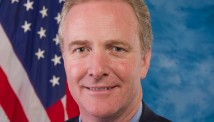
Rep. Chris van Hollen: Three lessons from Iraq can guide intervention in Syria He says President Obama must present clear evidence of Assad regime culpability He says U.S. must take strong action to punish Assad regime, deter use of chemical weapons Van Hollen: Mission must be clearly defined and achievable at an acceptable cost

Editor's note: Rep. Chris Van Hollen, a Democrat, represents Maryland's 8th District. Watch him on "Erin Burnett OutFront" Thursday at 7 p.m. ET.

(CNN) -- Our experience in Iraq provides three essential lessons that should guide America's response to the Syrian regime's alleged use of chemical weapons against its own people.

First, the president must present the American people and the international community with clear evidence that the al-Assad regime was responsible for the use of chemical weapons. The Bush administration took America to war in Iraq based on the false claim that Saddam Hussein had weapons of mass destruction, including stockpiles of chemical weapons.

Those false claims not only led us into a costly and unnecessary war, but did lasting damage to America's credibility. That erosion of credibility is haunting us now, as many in the international community question our claim that the al-Assad regime used chemical weapons. That makes it imperative that the Obama administration present clear and convincing evidence that the al-Assad regime was responsible for the chemical weapons use.

Rep. Chris Van Hollen Rep. Chris Van Hollen

Second, if the Obama administration presents such evidence, it is essential that the United States and the international community take strong action to punish the regime and deter the future use of chemical weapons in Syria or elsewhere in the world. Again, the Iraq example is instructive.

Many would like to forget the fact that the United States and the international community willfully ignored Saddam Hussein's use of chemical weapons against Iran during the Iran-Iraq war and against Iraq's Kurdish population in 1988 in the aftermath of that war.

I remember those days well. Together with Peter Galbraith, my former colleague on the staff of the Senate Foreign Relations Committee, I traveled to the Iraq-Turkey border in September 1988 to investigate Saddam Hussein's chemical weapons offensive against the Kurds. We returned to Washington to urge the United States government to impose economic sanctions against Iraq for its use of chemical weapons.

Hollen: We need more evidence in Syria Obama: 'I have not made a decision' U.S. lawmakers demand say on Syria Senator to Obama: Ask Congress on Syria
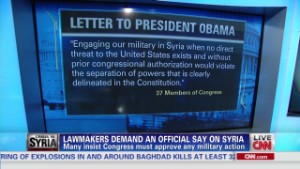
While the United States Senate did pass such legislation, it was opposed by the Reagan administration and never made it out of the House of Representatives. Recently released CIA documents demonstrate that the Reagan administration deliberately ignored Iraq's use of chemical weapons because it favored Iraq in its war against Iran. But the failure of that sanctions legislation represented a failure of the United States to help enforce the international convention against the use of chemical weapons.

A strong case can be made that the refusal of the United States and the international community to confront Saddam Hussein for his flagrant violations of the international ban on chemical weapons emboldened him to take additional reckless actions. In 1990, he miscalculated the international response to his invasion of Kuwait.

Years later, even after he had destroyed his chemical weapons stockpile, he underestimated the depth of international concern that he was still hiding them. That is perhaps not surprising, considering that the international community did nothing when Saddam Hussein actually used chemical weapons in the 1980s.

The United States and the international community must not again stand idly by if the al-Assad regime, or another party, has used chemical weapons. It must take action to uphold international norms and send a clear signal that breaches of the international ban on chemical weapons use will not be tolerated.

Failure to act upon strong evidence will only encourage Bashar al-Assad and other international actors to use chemical weapons in the future.

The third lesson from Iraq is equally important as the first two. Our mission must be clearly defined and achievable at an acceptable cost. In 1990, President George H.W. Bush established a well defined goal -- using force to oust Saddam Hussein's forces from Kuwait. He deliberately chose not to send American troops to Baghdad to topple Saddam Hussein, because he rightfully determined that the United States would not be able to contain the violent fallout without a huge commitment of American lives and treasure.

President George W. Bush later made the mistake that his father avoided. The Iraq war clearly established that even massive U.S. troop intervention on the ground for over eight years cannot change many of the basic cultural and sectarian forces at play in the region.

Today, despite the huge sacrifice in American and Iraqi lives, Iraq is rocked by almost daily eruptions of sectarian violence. The American-backed, Shiite-dominated government of Iraq now allows Iranian planes to use its airspace to supply weapons to al-Assad and the minority Shiite Alawite sect that controls Syria.

Meanwhile, al Qaeda and Sunni extremists in Iraq are fighting to defeat the government in Baghdad as al Qaeda and Sunni extremist forces in Syria are fighting in tandem with American-supported rebels to defeat the al-Assad regime. The toxic mix of forces suggests that even a large U.S. troop presence in Syria would be unlikely to change these deep-running currents.

These lessons are important as President Obama defines the purpose of American military action in Syria in response to the use of chemical weapons. The president should make clear that the goal of our military action is to punish Syria for its blatantly illegal use of chemical weapons and to deter the future use of such weapons by the Syrian regime or others that might contemplate their use in future conflicts.

Our action should be coupled with a clear statement that any future use of chemical weapons will be met with increasing force. This goal can be reasonably accomplished by using cruise missile strikes that inflict significant pain and damage on al-Assad's forces without putting American lives in the line of fire.

Some have argued that it is pointless for the United States to engage in punitive military strikes against Syria unless our actions are designed to decisively tip the military balance toward the rebels. That claim downplays the more limited, but nevertheless important, objective of deterring the future use of chemical weapons.

Moreover, defining the success of our response as decisively changing the military balance is unrealistic, unachievable without putting American lives at risk, and will ultimately drag the United States toward full-scale intervention in a Syrian civil war.

Gen. Martin Dempsey, chairman of the Joint Chiefs of Staff, has stated that measures like the establishment of a no-fly zone would put American pilots at risk and may not change the situation on the ground.

Measuring success of these actions in terms of changing the tide of the war will lead inexorably to further assertions that American credibility is at stake and suck America into a costly civil war that could, with the current configuration of forces, result in the extremist al Qaeda elements among the rebels gaining the upper hand. That is why it is so important to define this particular mission in a way that can be achieved at an acceptable cost.

Let's heed three important lessons from Iraq: Protect our credibility by presenting clear evidence of the use of chemical weapons by the al-Assad regime; take strong action to punish the illegal use of chemical weapons and deter their future use; and define the mission in achievable terms at a cost we are willing to pay.

Follow us on Twitter @CNNOpinion.

Join us on Facebook/CNNOpinion.

Bergen: Al Qaeda's potent Syria force

Posted by Unknown

Peter Bergen: U.S. may be reluctant on Syria due to role of al Qaeda-linked group He says group has emerged as most effective rebel force and helps fill social needs Bergen: Al Qaeda's Syrian affiliate attracts the most foreign fighters in conflict He says group has shown ability to stage suicide bombings, threatens U.S interests

Editor's note: Peter Bergen is CNN's national security analyst, a director at the New America Foundation and the author of "Manhunt: The Ten-Year Search for bin Laden -- From 9/11 to Abbottabad."

(CNN) -- Why has the Obama administration been so reluctant to intervene in Syria? There are a host of reasons -- American fatigue with war, President Barack Obama's disinclination to start another conflict in the Middle East, and the splintered, fractured opposition to Bashar al-Assad.

But one reason looms large: al Qaeda.

Al Qaeda's affiliate in Syria, Jabhat al-Nusra, is generally acknowledged to be the most effective force fighting al-Assad.

Peter Bergen Peter Bergen

Its fighters are willing to sacrifice themselves for the cause, are widely viewed as uncorrupt and are not involved in looting as other opposition forces are. A number of them are battle-hardened from other conflicts such as the Iraq War.

Al Qaeda's Syrian affiliate is also well supplied as it benefits from the support of Sunni ultra-fundamentalists in the wealthy Gulf states such as Qatar and Saudi Arabia.

Jabhat al-Nusra, which means the "Victory Front," was listed as a foreign terrorist organization by the U.S. State Department in December and is essentially a splinter organization of al Qaeda in Iraq.

Al-Nusra's military prowess and close ties to al Qaeda make it a potentially serious threat to U.S. interests in the region, and the group has shown it has the ability to conduct massive suicide bombings.

A Syrian town ruled by rebels Obama: 'I have not made a decision' Senator to Obama: Ask Congress on Syria

In November, al-Nusra claimed responsibility for 45 attacks in the provinces of Damascus, Deraa, Hama and Homs that killed dozens of people, including one suicide bomb that reportedly resulted in 60 casualties.

It was the first insurgent organization in Syria to claim responsibility for attacks that caused civilian casualties.

Despite these civilian casualties, the group has been able to garner considerable support from Syria's Sunni population, not only because it is the premier fighting force in the campaign to topple al-Assad but also because it is involved in providing critical services such as food, medical services and Sharia courts to the embattled population.

Also, for the moment, al-Nusra is not imposing Taliban-style rule in areas that it controls as al Qaeda did in Iraq's massive Anbar province during the first years of the Iraq War. Al Qaeda's harsh rule in Iraq precipitated the 2006 "Sunni Awakening" in which Iraq's Sunni tribes rose up against the group.

Al-Nusra seems to have learned from this mistake and is operating in a Hezbollah-like manner as a large-scale provider of social services, and with the consent of the population in the areas it controls.

There is some confusion about how exactly al-Nusra fits into the larger al Qaeda network.

Al Qaeda in Iraq released a statement in April announcing its official merger with al-Nusra, proclaiming that their joint organization would be called the Islamic State of Iraq and the Levant. A leader of al-Nusra later rejected the merger but pledged the group's support for al Qaeda's overall leader, Ayman al-Zawahiri.

On June 9, Al Jazeera obtained a copy of a letter from al-Zawahiri annulling the merger.

But a week later, in an audio recording posted online, al Qaeda in Iraq rejected al-Zawahiri's annulment of the merger, likely adding to the confusion of al Qaeda cadres.

Syria is a particularly agreeable environment for al Qaeda. During the Sunni insurgency in Iraq that began in 2003, it was a key base for training and supporting foreign fighters.

Al-Assad is also the perfect al Qaeda villain. He is an Shia Alawite and therefore a heretic in the eyes of the Sunni fundamentalists. He is a secularist and therefore an apostate in their view, and he is conducting a war without quarter against much of his Sunni population.

Some 2,000 to 5,500 foreign fighters are believed to have traveled to Syria since the beginning of the Syrian conflict to join the rebels who aim to topple the Assad regime.

Not all of them have necessarily joined jihadist factions of the rebel forces, but because most foreign fighters are drawn to the conflict because of a perceived religious responsibility, it is likely that these groups have drawn the lion's share of the foreigners.

Even at high-end estimates, foreign fighters make up a small portion of the forces arrayed against the Assad regime: no more than 10%.

Al-Nusra is the opposition group in Syria that attracts the most foreign fighters. It is believed that there are about 100 foreign fighters from the United Kingdom fighting in Syria.

Experts say the number of Americans fighting in Syria is likely less than 10, and only a couple of instances of Americans fighting with al-Nusra have been confirmed.

Eric Harroun, a former American solider, was charged in 2013 with conspiring to use a rocket-propelled grenade in Syria, and he admitted to fighting with al-Nusra.

Follow us on Twitter @CNNOpinion.

Join us on Facebook/CNNOpinion.